Boris Berenzon Gorn (0009-0000-2303-0526)
Programa de Cómputo Académico
Instituto Nacional de Antropología e Historia (México)
Abstract: In a historical moment saturated with stimuli yet increasingly marked by existential fatigue, football persists as one of the few collective practices capable of suspending ordinary time. This article approaches the 2026 FIFA World Cup, jointly hosted by Mexico, the United States, and Canada, not merely as a mega-sporting event but as a cultural dispositif in which the central tensions of contemporary life are condensed: boredom and spectacle, ritual and market, digital hyperconnectivity and emotional exhaustion. Rather than treating boredom as an individual psychological condition, the article conceptualizes it as a historical and social experience produced by regimes of acceleration, productivity, and compulsory enjoyment. Within this framework, football emerges as both a promise of intensity and a mechanism for managing fatigue. It can interrupt routine through unpredictability and shared emotion, yet it can also reproduce saturation when transformed into a permanent spectacle governed by marketing, algorithms, and the attention economy. Drawing on perspectives from anthropology, cultural history, philosophy, and digital humanities, the article examines how football functions today as ritualized escape, commodified desire, and a symbolic stage for violence, identity, and generational transformation. Particular attention is paid to younger generations, whose engagement with football is increasingly fragmented, ironic, and mediated by digital platforms. The 2026 World Cup ultimately appears as both symptom and possibility: a global celebration that may deepen the anesthetic logic of contemporary entertainment or briefly recover football’s fragile capacity to produce meaning, community, and lived experience in a world increasingly bored by its own excess.
Keywords: Football; FIFA World Cup 2026; boredom; spectacle; digital culture; political economy of sport; youth and media; anthropology of sport; contemporary fatigue; attention economy.
1. Introduction: Football as a Diagnostic of the Present
Football has often been approached either with indulgence or suspicion: indulgence when treated as harmless entertainment, suspicion when reduced to ideological distraction. Both approaches miss its analytical potential. Football is not marginal to contemporary culture; it is one of its most legible symptoms. Few practices reveal with such clarity how time, desire, identity, and community are organized under late modern conditions.
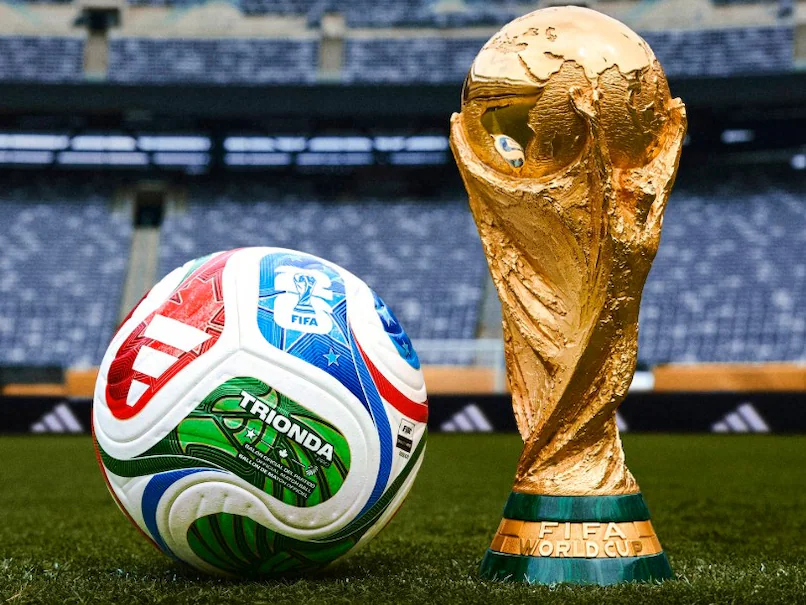
The 2026 FIFA World Cup, jointly hosted by Mexico, the United States, and Canada, represents a qualitative leap in this process. Its unprecedented scale—expanded teams, expanded territories, expanded markets, expanded digital infrastructures—signals not only organizational ambition but a transformation in how global experience itself is produced and consumed.
This article proposes boredom as a key concept for understanding that transformation. Not boredom as lack, but boredom as saturation; not boredom as silence, but boredom as noise without resonance.
2. Boredom Beyond Psychology: A Social and Historical Experience
Boredom is often moralized. It is interpreted as laziness, distraction, or personal failure. Such interpretations obscure its structural character. Boredom emerges historically when societies succeed too well at occupying time while failing to endow it with meaning.
In contemporary life, time is relentlessly filled. Work extends beyond the workplace. Leisure becomes productive. Communication becomes obligatory. The subject is no longer primarily repressed but overexposed. This condition produces a paradoxical affect: exhaustion without rest, stimulation without satisfaction.
Boredom, in this sense, is not the absence of events but their inflation. It signals that experience has been flattened into a sequence of interchangeable moments. Football enters this landscape not as an anomaly but as a compensatory mechanism.
3. Football and the Promise of Temporal Suspension
One of football’s enduring powers lies in its capacity to suspend ordinary time. A match reorganizes attention, interrupts routines, and creates a shared temporal horizon. For ninety minutes, something is at stake that cannot be postponed.
World Cups intensify this effect. They generate calendars, rituals, and narratives that temporarily displace everyday concerns. Streets empty, schedules shift, conversations synchronize. Football becomes a collective clock.
Yet this temporal suspension is fragile. When anticipation becomes permanent, suspension collapses into continuity. The more football expands into every corner of daily life, the less it can interrupt it.
4. Ritual Without Transcendence
Anthropologically, football operates as a ritual form. It produces collective identification, symbolic boundaries, and emotional synchronization. However, unlike traditional rituals, contemporary football rituals lack transcendence. They do not connect participants to a cosmological order or shared metaphysical horizon.
Instead, football rituals circulate within immanent systems of media, market, and technology. They create belonging, but a belonging that is constantly mediated, quantified, and monetized. The World Cup offers communion without depth, intensity without duration.
This transformation does not render football meaningless, but it changes the nature of its meaning. It becomes situational, fleeting, dependent on circulation rather than memory.
5. From Event to Infrastructure
A defining feature of late modernity is the conversion of events into infrastructures. What once occurred occasionally now operates continuously. Football exemplifies this shift.
The match is no longer an isolated occurrence. It is embedded in a vast apparatus of previews, analytics, simulations, advertising, and commentary. Algorithms predict outcomes, curate narratives, and shape emotional expectations.
As a result, surprise becomes rare. When everything is anticipated, the unexpected loses force. The World Cup’s claim to exceptionality risks being undermined by its own omnipresence.
6. Market Rationalities and the Governance of Emotion
Football today is inseparable from market rationality. This does not simply mean commercialization; it means the governance of affect. Emotions are produced, timed, and circulated according to economic logics.
Desire is no longer spontaneous. It is guided by campaigns, metrics, and algorithms. Loyalty becomes a data point. Passion becomes a brand asset.
The danger is not that football is commodified, but that commodification becomes total. When no outside remains, when every gesture is monetized, meaning itself becomes precarious.
7. Digital Mediation and the Transformation of Attention
Digital technologies have radically altered how football is experienced. Matches coexist with highlights, memes, live commentary, betting platforms, and social media discourse. Attention is fragmented, mobile, and layered.
Younger generations navigate football as one cultural object among many. They engage selectively, often ironically. They may follow teams passionately while refusing total immersion.
This ambivalence is not indifference. It is a response to overstimulation. Digital mediation allows for participation without surrender, presence without absorption.
Yet algorithms tend to narrow rather than expand experience. They privilege repetition, familiarity, and emotional predictability, reinforcing boredom even as they promise novelty.
8. Violence, Identity, and Symbolic Discharge
Football remains a privileged space for the expression of collective emotions that are otherwise constrained. Stadiums allow shouting, insult, euphoria, and hostility. These expressions do not originate in football; they are displaced into it.
The 2026 World Cup will unfold across societies marked by migration debates, racial tensions, economic inequality, and political polarization. Football will not resolve these tensions, but it will dramatize them.
This duality—catharsis and escalation—underscores football’s ambivalence. It can bind communities together while simultaneously reinforcing exclusion.
9. Youth, Generations, and the Refusal of Total Belief
Generational shifts are crucial to understanding contemporary football. Younger audiences often resist total belief. They engage playfully, critically, and selectively.
This refusal of total immersion may signal not apathy but a demand for distance. A desire to enjoy without surrendering autonomy. A strategy for surviving saturation.
Football, in this sense, becomes a testing ground for new forms of cultural engagement: partial, ironic, mobile.
10. Why Boredom Endures
Why does boredom persist despite constant stimulation?
Because stimulation is not meaning. Because acceleration does not create depth. Because experience requires limits, and contemporary culture resists them.
Football is asked to compensate for existential deficits it did not create. When burdened with this task, it too becomes exhausted.
Boredom endures not because football fails, but because contemporary life has lost the capacity for genuine suspension.
11. Conclusion: The Fragile Politics of Interruption
The 2026 FIFA World Cup will be monumental. It will dominate screens, markets, and conversations. But its significance will not lie in its scale.
It will lie in fragile moments of interruption: a silence in a stadium, an unscripted gesture, a collective gasp that cannot be monetized in real time.
Football still matters not because it entertains endlessly, but because—on rare occasions—it interrupts the boredom of overstimulation with something irreducibly human: unpredictability, error, presence.
In an age exhausted by spectacle, such interruptions may be brief. But they remain politically and culturally meaningful.
References
Alabarces, P. (2014). Héroes, machos y patriotas: El fútbol entre la violencia y los medios. Buenos Aires: Fondo de Cultura Económica.
Bauman, Z. (2007). Liquid life. Cambridge: Polity Press.
Benjamin, W. (2008). The storyteller. New York: New York Review Books.
Debord, G. (1994). The society of the spectacle. New York: Zone Books.
Han, B.-C. (2015). The burnout society. Stanford: Stanford University Press.
Huizinga, J. (1955). Homo Ludens. Boston: Beacon Press.
Whannel, G. (2014). Media sport stars: Masculinities and moralities. London: Routledge.
FIFA. (2024). FIFA World Cup 2026: Official overview. Zurich: FIFA.